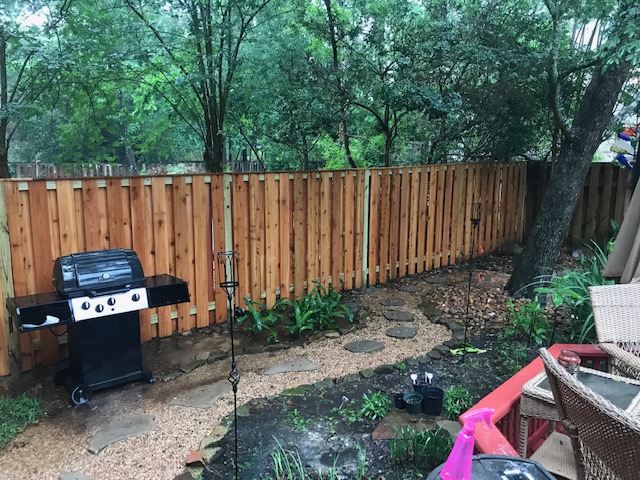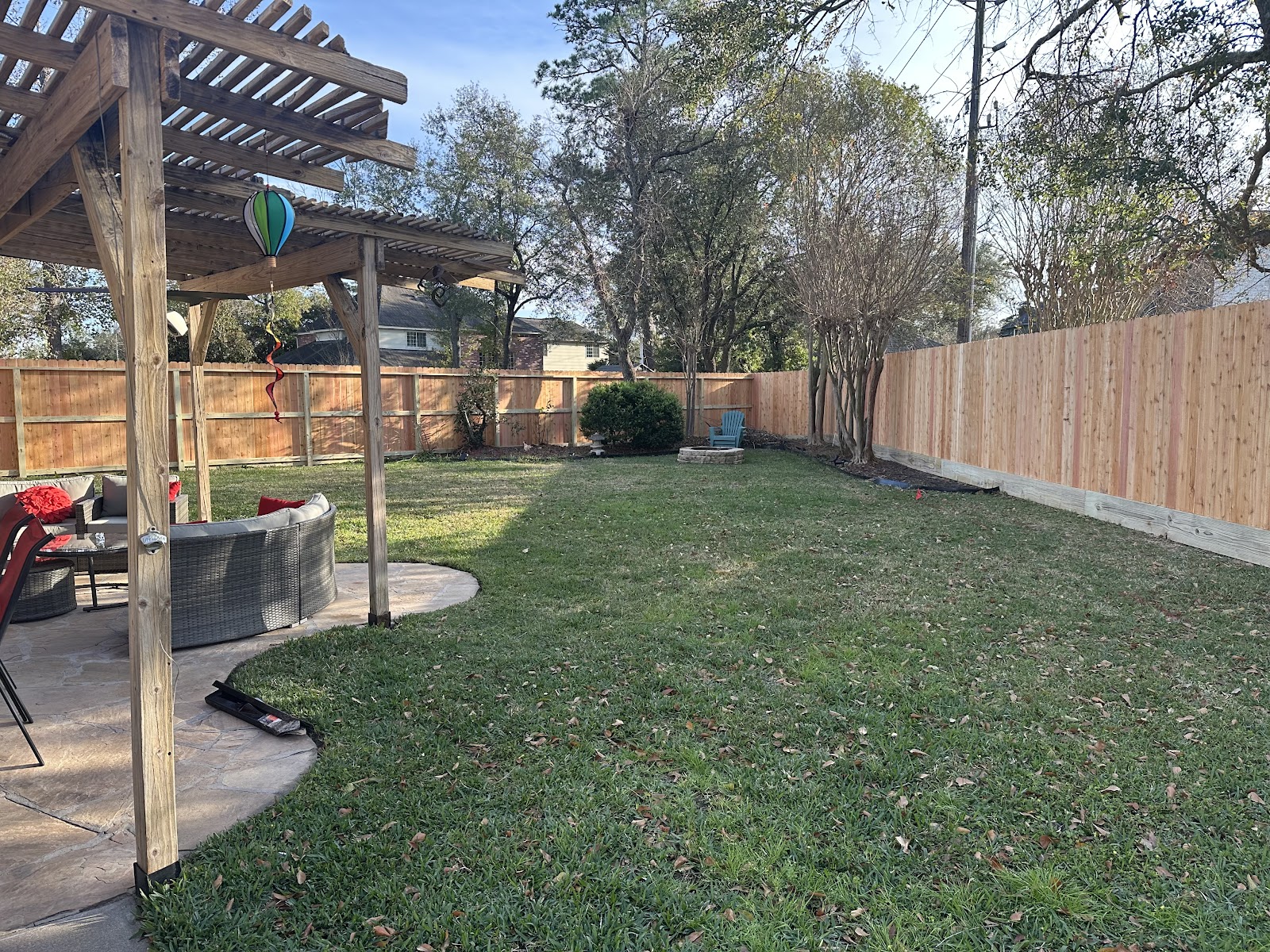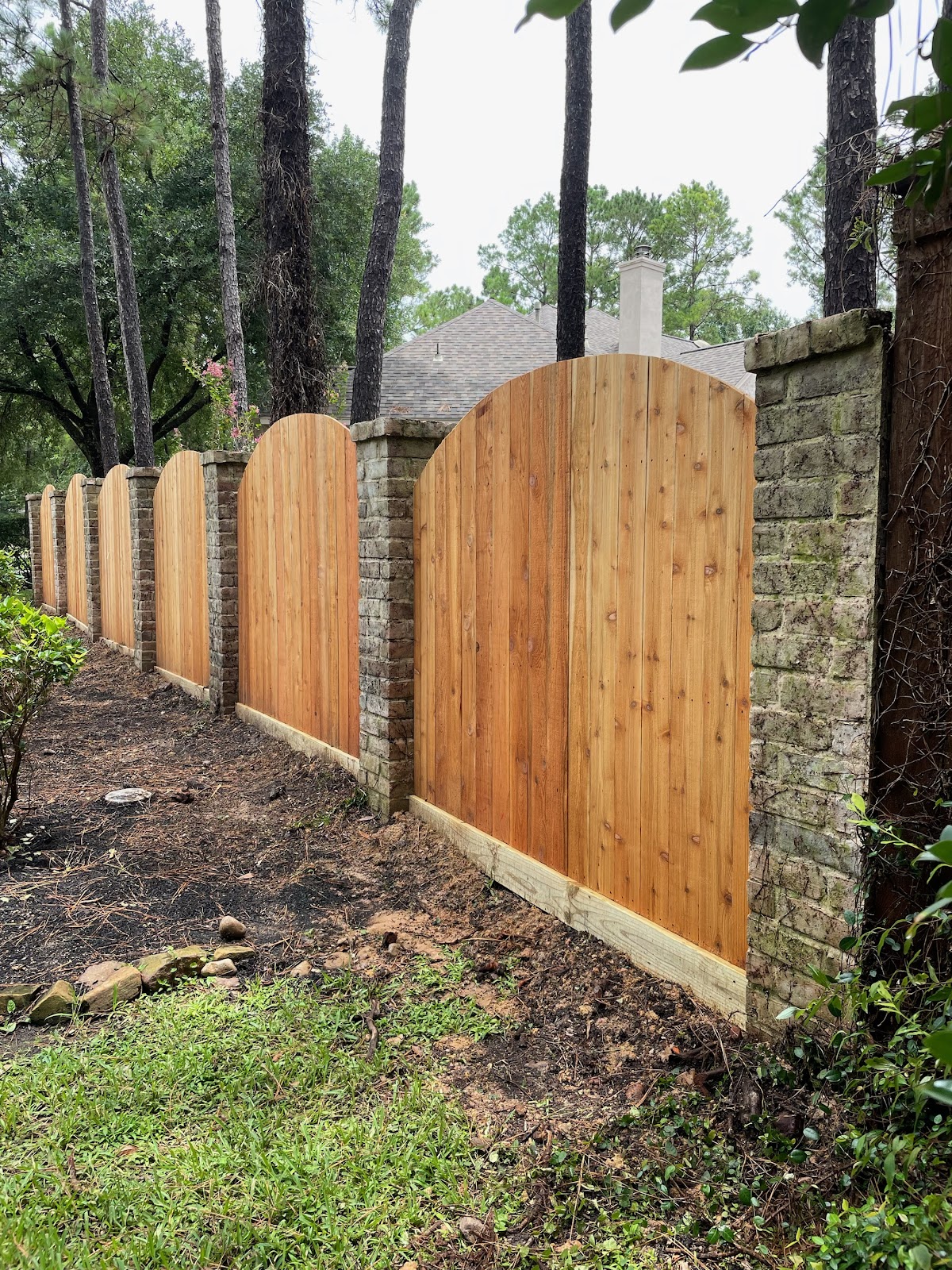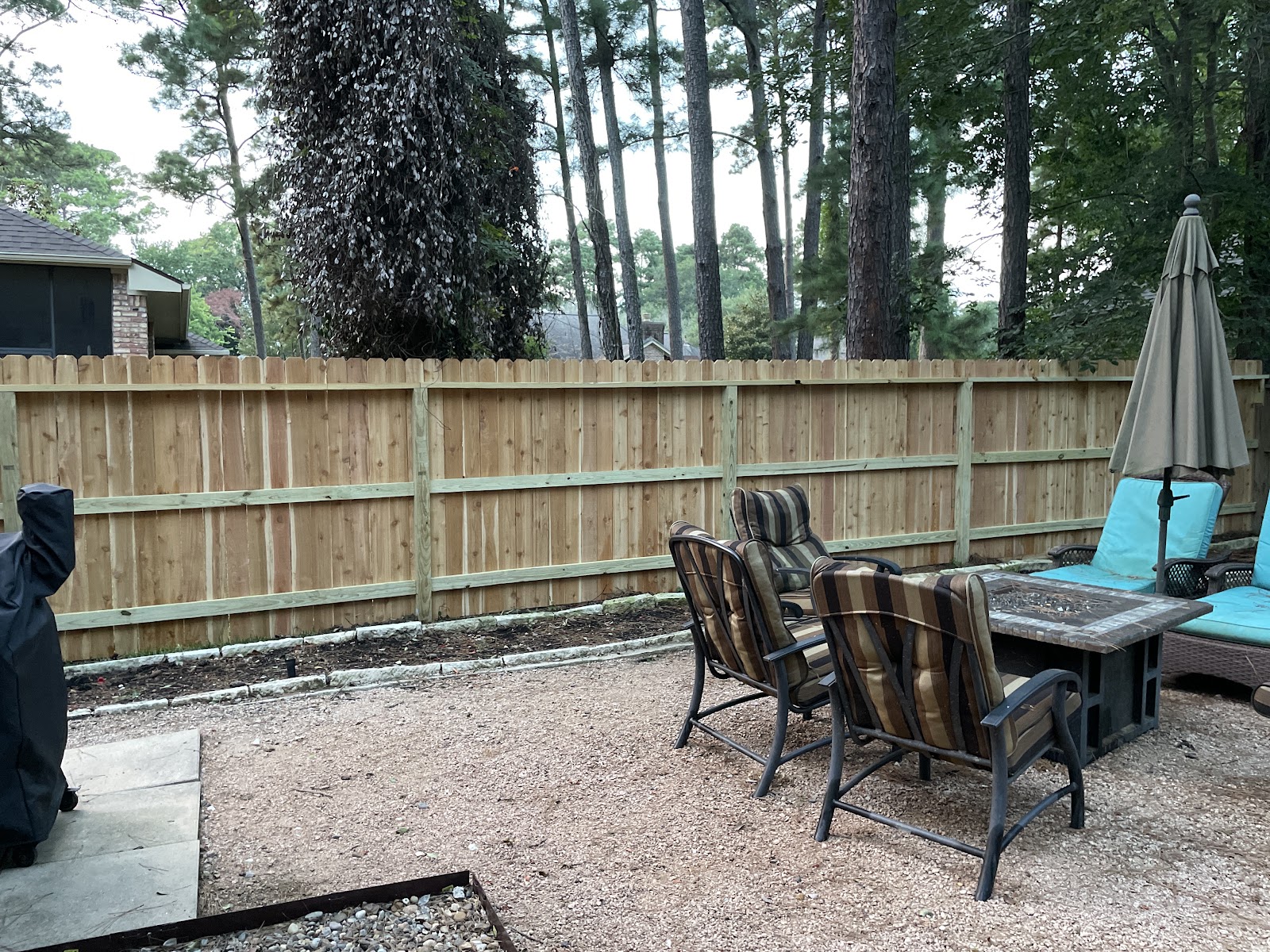
When you're replacing an old fence or installing a new one in The Woodlands, you end up with a real problem: the line where your fresh fence meets your neighbor's weathered one. That transition point can look sloppy, unfinished, or even like you're trying to hide something. It matters more than people think, both for curb appeal and for the practical question of what actually belongs to whom. We see this situation constantly at Right Fence Company, and there are several legitimate ways to handle it that work with your neighbor's property line and your own sense of how things should look.
Know Your Property Line First
Before you do anything, know exactly where your fence sits. Get a survey if you're not certain. In The Woodlands, a lot of properties have shared fences, where the line runs through the middle of the fence structure itself. Some deeds say the fence belongs to one neighbor entirely. Some say both neighbors own it jointly and split the cost of repairs. This matters because if you're installing your own fence, you need to know whether you're building on your side only or whether you have any claim on the old fence next to it. A surveyor costs a few hundred dollars and saves months of awkward conversations or regret later.
The Hard Stop: Where Your Fence Ends
The cleanest approach is often the honest one. Your fence ends where your property ends. That means the last post and rail of your new fence sits right on your property line. When it meets an older fence next door, you get a visible joint. Some homeowners in The Woodlands paint or stain that joint to match, which can look intentional and neat. Others leave it natural, which reads as "this is the boundary." If the neighbor's fence is in rough shape, this approach makes it clear that's their responsibility, not yours. It also means you're not trying to hide the age difference between the two fences.
Stepping Back: The Offset Method
Another real option is to set your new fence slightly inboard from the property line. This creates a gap between your fence and the neighbor's. In The Woodlands, a gap of 6 inches to a foot works well. You can plant a line of shrubs or ornamental grasses in that gap, which softens the visual transition and gives you a buffer. The neighbor's old fence becomes a backdrop, and your fence becomes the focal point. This method costs more because you're losing a little ground, but it solves the "old fence showing" problem without requiring the neighbor to do anything. It also makes maintenance easier on both sides.
The Blend: Matching Styles at the Boundary
If both fences are similar in style (both wood, both vinyl, both metal), you can create a visual blend by matching materials and finishes at the meeting point. This doesn't mean extending onto their property, but it means your fence's final section is detailed in a way that acknowledges the neighbor's fence. For example, if both are wood, you might add a matching cap rail or trim piece at the end of your fence that echoes the neighbor's design. This works best when the neighbor's fence is well-maintained. If it's deteriorating, this approach can backfire by drawing attention to the contrast.
When the Neighbor's Fence Needs Attention
Sometimes the real issue is that the old fence is falling apart, and you don't want your new investment sitting next to a mess. You have a few choices here. You can talk to the neighbor about their fence and offer to share contact information for a good contractor. Many people in The Woodlands don't realize their fence is in bad shape until someone mentions it directly. You can also offer to cover part of the cost to replace it, which puts the boundary on equal footing. Or you can use the offset method and landscaping to visually separate your fence from theirs. None of these require you to cross the property line or do work on someone else's land.
Living with the Difference
The truth is, many fence transitions in The Woodlands just show the age and style difference between properties. That's normal. A well-maintained new fence next to an older one isn't a failure. It's just a fact of how neighborhoods develop over time. Some people worry about resale, but buyers understand that fences age and get replaced on different schedules. What matters more is that your fence is solid, that it's clearly on your property, and that it's maintained well.
The transition between your fence and a neighbor's doesn't have to be a source of stress. Start with a survey to know your boundaries, choose a method that fits your budget and your neighbor's situation, and execute it cleanly. Right Fence Company has handled dozens of these boundary situations in The Woodlands. If you're planning a fence and want to talk through how to handle the transition points on your property, call us for a consultation.